

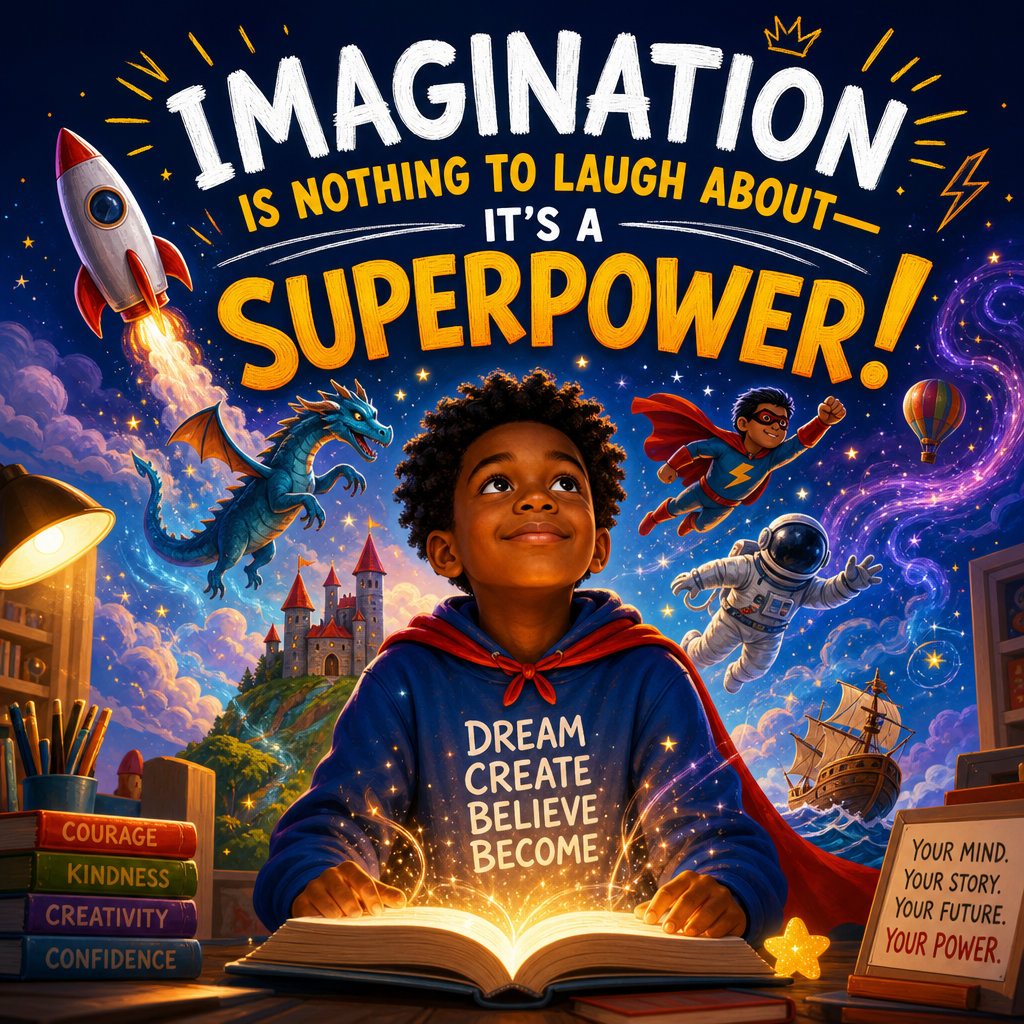
In a world that feels louder, faster, and more unpredictable than ever, kids need more than rules, routines, and reminders. They need something deeper — something that helps them navigate fear, build confidence, and see possibilities where others see limits. That “something” is imagination.
And let’s be clear: imagination is not something to laugh about. It’s not “just pretending.” It’s not a phase kids grow out of. Imagination is a superpower, and when we teach children to value it, we give them a lifelong advantage.
Imagination Builds Courage
Every child faces moments that feel too big — a new school, a tough subject, a scary news story, or a challenge they don’t know how to solve. Imagination gives them a way to rehearse bravery before they need it.
When a child imagines themselves as a hero, a problem-solver, or a character who overcomes obstacles, they’re not escaping reality. They’re preparing for it. They’re learning that courage starts in the mind long before it shows up in the real world.
Imagination Strengthens Emotional Resilience
Kids feel deeply. They worry. They wonder. They get overwhelmed. Imagination gives them a safe place to process those emotions.
A child who imagines a peaceful forest, a friendly animal guide, or a magical world where problems can be solved is actually building emotional tools. They’re learning to calm themselves, redirect fear, and create hope — all through the power of their own mind.
This isn’t silly. It’s science. It’s psychology. It’s growth.
Imagination Fuels Problem‑Solving
Every invention, every breakthrough, every great idea in history started as a picture in someone’s mind. Kids who imagine solutions grow into adults who create them.
When a child builds a world out of blocks, draws a character, or dreams up a story, they’re practicing critical thinking. They’re learning how to connect ideas, test possibilities, and explore outcomes. Imagination is the foundation of innovation.
Imagination Builds Confidence
There’s something powerful about creating something from nothing. When a child imagines a story, a character, a world, or a solution, they learn that their ideas matter.
They learn that their voice has value. They learn that their creativity has impact. They learn that they can shape their own future.
Confidence doesn’t come from perfection — it comes from creation.
How We Teach Kids That Imagination Is a Superpower
Kids won’t believe imagination is powerful unless adults show them. Here’s how:
- Celebrate their ideas — Treat their stories, drawings, and inventions like real creations.
- Give them space to create — A notebook, a sketchpad, or a quiet corner becomes a launchpad.
- Model imagination yourself — When adults imagine out loud, kids learn it’s normal and valuable.
- Connect imagination to courage — Show them how imagining bravery helps them be brave.
- Use stories that empower — Books with strong characters teach kids to see strength in themselves.
This is exactly why Big Dawg Books exists — to give kids worlds where imagination is celebrated, not dismissed. Worlds where bravery is practiced. Worlds where creativity is encouraged. Worlds where kids learn that their minds are powerful tools they can rely on.
The Message Kids Need to Hear
“Your imagination isn’t silly. It isn’t childish. It’s a power that helps you understand the world, shape your future, and become who you’re meant to be.”
If we teach kids to protect their imagination, nurture it, and use it boldly, we’re giving them a gift that lasts a lifetime.
